
 admin
admin
Most buildings can look “covered” on a map, yet still feel unreliable when the space gets busy. The reason is simple: coverage shows where a signal can reach, not how well the network behaves when hundreds of devices are active at once. Offices spike at 9 a.m., hospitals surge at shift change, and warehouses flood with scanners and tablets. That is when weak design choices show up fast.
Traffic modeling changes the conversation from “Where are the antennas?” to “What happens at peak demand?” When teams model users, apps, and movement patterns early, they make smarter calls on sectoring, core sizing, and growth headroom. The result is a DAS that performs on real workdays, supports expansions, and protects tenant expectations without constant troubleshooting.
Why Traffic Modeling Beats Coverage-Only Planning
Coverage maps are useful, but they are not a performance promise. A plan can show a strong signal across a floor and still deliver slow data or unstable calls when the building is full. Traffic modeling fills that gap by estimating active devices, usage patterns, and where demand concentrates. That gives teams a realistic picture of stress points before they spend money on hardware and install labor.
Read More : Genetic Testing & Health Insights: Understanding Your DNA for Smarter Wellness Decisions
Traffic-led planning also creates better stakeholder alignment. Leaders can compare normal-day demand to event-day peaks and approve capacity with clear reasoning. Their teams can identify which areas need higher performance, like training floors, public lobbies, or production zones.
Hotspot Mapping that Guides Das Installation Planning
A strong model starts with the building’s daily rhythm. Offices have arrival waves, lunch clusters, and meeting spikes. Retail sees weekend surges and seasonal peaks. Industrial sites combine steady handheld traffic with bursts at loading bays. Hotspot mapping turns those patterns into zones with estimated peak users, so the design follows movement and dwell time, not just square footage.
During DAS system installation planning, hotspot data helps teams place coverage where it matters most and validate what “good” means in busy spaces. Lobbies, conference corridors, and shared amenity floors often need stronger performance than quiet admin wings. When installers know the hotspots early, they can route pathways and stage access in a way that supports the design intent and avoids rework.
Turning User Behavior into Sectoring and Capacity Decisions
Once hotspots are clear, sectoring can match demand instead of following a template. A floor full of meeting rooms often needs more separation than a quiet office area. A lobby supporting guests and security may need different treatment than the back corridors. Traffic modeling supports these calls by tying antenna density and configuration to expected concurrency and the app mix within each zone.
Modern usage is also heavier and longer-lived than it used to be. Video meetings, cloud apps, and real-time collaboration keep sessions active, so congestion appears quickly when capacity is tight. Their teams can use this insight to build practical headroom where it is needed. A slightly stronger plan up front is often cheaper than retrofits, escalations, and tenant friction after occupancy.
Core Sizing That Makes a DAS Installation Scale
Many DAS performance problems start at the core. If backhaul, switching, or head-end capacity is undersized, the building can show a strong signal while throughput collapses at peak. Traffic modeling helps teams size the core for real demand, including expected carrier participation, service growth, and the operational load that will exist after move-in, not just at commissioning.
A good DAS system install scope should spell out power, rack space, cooling, grounding, and protected pathways because these factors drive stability. It should also define how carrier inputs are handled and how performance will be tested and documented. When core decisions are made early and written clearly, teams avoid late change orders and reduce the “installed on time, but still slow” outcome.
Designing for Phased Growth across Expanding Properties
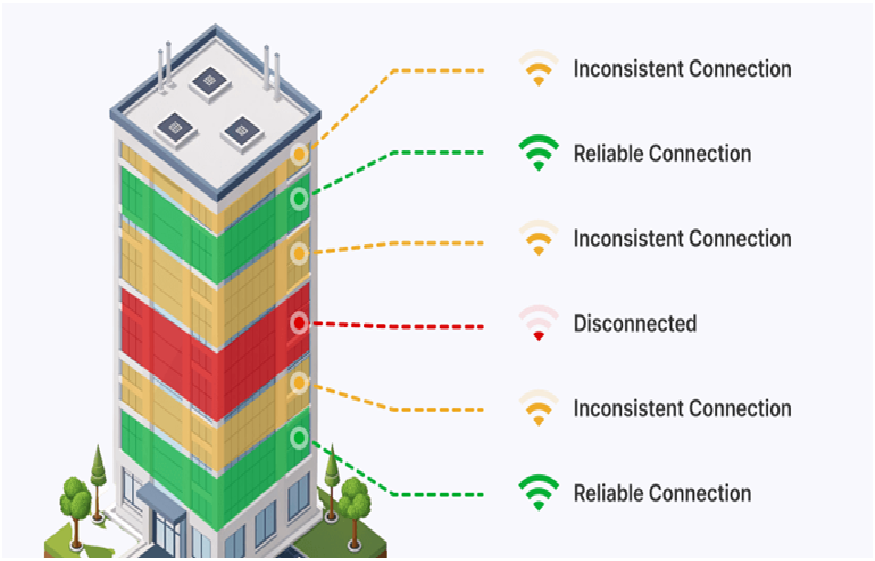
Commercial properties rarely stay static. Tenants grow, floors get reconfigured, and new device types appear quickly. A traffic model can include a realistic growth factor tied to leasing plans and headcount, which helps teams choose designs that scale. That might mean reserving pathways, keeping head-end space flexible, and choosing equipment that can expand without ripping out ceilings in year two.
Growth planning also supports portfolio consistency. Owners managing multiple properties can define traffic tiers and apply them across sites so performance expectations stay uniform. Their teams can set revalidation points after major tenant work, which keeps the system aligned to current use. This reduces one-off designs that are hard to support and makes budgeting and scheduling more predictable over time.
Load Testing that De-Risks Closeout and Handoff
A model becomes valuable when it is validated. Load testing checks performance where people gather by measuring throughput and stability under realistic use, including uplink and downlink behavior. It is especially useful in lobbies, conference zones, and dense floors where congestion shows up first. The test plan should reflect the model’s peak assumptions so results are meaningful to owners and tenants.
A well-run das system installation closeout should also capture a baseline that teams can reuse later. Zone-by-zone results, notes about building conditions, and documented tuning changes create a clear “before” snapshot. That baseline makes future troubleshooting faster after remodels or tenant changes. It also builds confidence because performance proof is mapped, repeatable, and easy to explain.
Documentation that Supports Tenant Trust and Faster Decisions
Performance proof is useful beyond engineering. When owners can explain their in-building connectivity plan clearly, it builds trust with tenants, safety teams, and internal leadership. Many organizations rely on documentation to support RFPs, leasing discussions, and operational planning. A clear summary of what was modeled, what was tested, and what was delivered helps decision-makers move forward without guessing.
A smart das system install also produces records that stay useful: as-builts, labeled pathways, baseline test results, and a simple change-management plan. This makes it easier to evaluate future expansions and avoid repeated discovery work. If tenants reconfigure space or add higher-density teams, owners can respond with evidence and a plan instead of starting from scratch.
Conclusion
Smarter DAS design starts with traffic because traffic is what breaks systems in real life. Coverage maps show reach, but modeling shows stress, and stress is where users feel the pain first. When teams map hotspots, size the core, and validate assumptions with load testing, they deliver a system that performs on peak days and stays resilient as tenants and workflows evolve.
CMC communications can support teams that want a traffic-led approach, from early modeling through closeout documentation that stays useful after turnover. Their team helps keep the scope clear, testing repeatable, and performance easier to maintain as buildings expand and change. That structure reduces surprises and helps owners protect the experience tenants expect in busy, high-value spaces.
Frequently Asked Questions
Question: What is traffic modeling in a DAS project?
Answer: Traffic modeling estimates how many devices will be active at peak times, what they will be doing, and where demand will cluster in the building. It helps teams plan for real load, not just signal reach. When the model is clear, capacity decisions are easier to justify and easier to validate later. It also reduces the risk of overbuilding quiet areas while under building hotspots.
Question: Why can a DAS show a strong signal but still feel slow?
Answer: A strong signal only proves devices can connect, not that they will perform well under crowd conditions. When too many users share limited resources, speeds drop, and calls become unstable during peak periods. This usually shows up first in lobbies, conference corridors, and high-density floors. Traffic modeling helps teams predict these bottlenecks early so the design matches real demand.
Read More : Cloud Cost Optimization: How Forward-Thinking Companies Reduce Cloud Spend and Maximize Value
Question: What inputs make traffic modeling more accurate?
Answer: The best inputs include headcount by zone, device types, and the application mix, such as video, cloud tools, and voice. Meeting schedules, guest traffic, and shift changes help define true peaks. Layout factors like elevator cores, heavy walls, and long corridors also matter because they shape movement and clustering. Better inputs usually mean fewer changes after commissioning.
Question: When should teams run load testing?
Answer: Many teams run a pre-test while ceilings and pathways are accessible, then a final test near turnover when the building reflects real conditions. Testing should mirror the traffic model’s peak assumptions, not an empty-building scenario. That makes results more meaningful to owners and tenants. It also creates a baseline that can be reused after remodels or expansion phases.
Question: How does traffic-led design help future expansions?
Answer: Traffic-led design builds headroom and documents a baseline, so teams can scale capacity without rebuilding the entire system. When tenants expand or reconfigure space, teams can retest targeted zones and compare results to the original benchmark. This keeps upgrades focused and predictable. It also reduces the risk of performance complaints right after a renovation or occupancy change.